


[Image description: A graphic with a pink brush-stroke background. In the centre is a cream box with a black hand-stitched border. Text reads: “Disabled Women & Poverty: The Cost of Exclusion – Participant Feedback – Part 5.” Along the bottom are logos for Disability Participation News Hub, Disabled Women Ireland and the Department of Social Protection.]
Disabled Women & Poverty: The Cost of Exclusion - Participant Feedback Part 5
In Part 5 of this series from our Disabled Women & Poverty event with Disabled Women Ireland, we are sharing responses from our fifth question posed to participants:
“What makes it harder for disabled women, girls and non-binary/genderqueer/gender non-conforming people to access social welfare? How is this different compared to disabled men or non-disabled women?
You’ll find some of the responses from the question in a series of images below.
Participants contributed through discussions, sticky notes, artwork, and a survey to share their thoughts and experiences.
We will also be working on a report to gather the insights from those who participated for future work and advocacy on this topic.
Thank you again to everyone who shared their time, insights, and experiences.
Keep an eye on our social media and Substack for further highlights!
Follow Disabled Women Ireland and keep up with their work on the DWI website.
This project was supported by the Department of Social Protection as part of the funding for the United Nations International Day for the Eradication of Poverty 2025.
[Image 1 description: A graphic with a pink brush-stroke background. In the centre is a cream box with a black hand-stitched border. Text reads: “Disabled Women & Poverty: The Cost of Exclusion – Participant Feedback – Part 5.” Along the bottom are logos for Disability Participation News Hub, Disabled Women Ireland and the Department of Social Protection.]
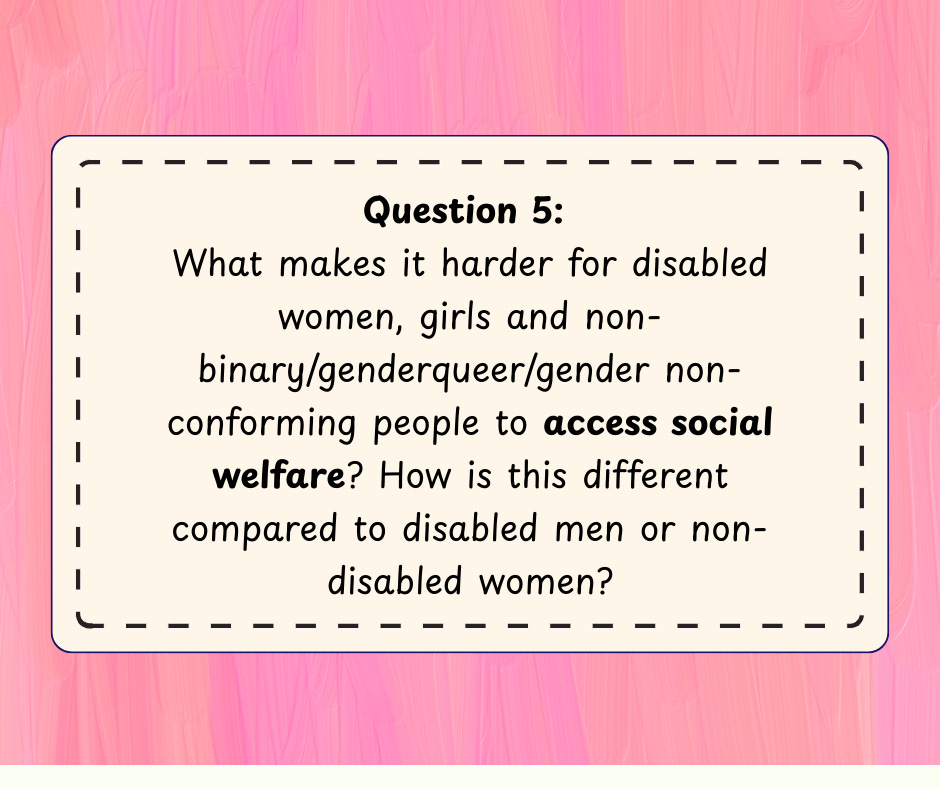
[Image 2 description: A graphic with a pink brush-stroke background. A cream box with a hand-stitched black border contains the text: “Question 5: What makes it harder for disabled women, girls and non-binary/genderqueer/gender non-conforming people to access social welfare? How is this different compared to disabled men or non-disabled women?”]
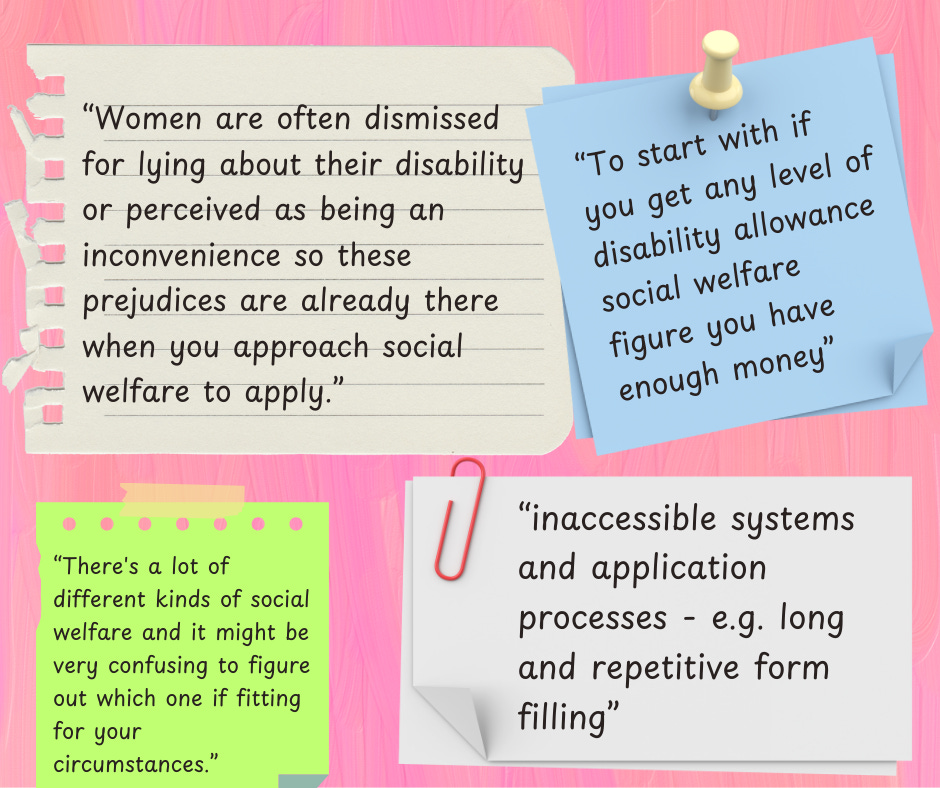
[Image 3 description: A collage-style graphic over a pink brush-stroke background with several paper notes and sticky notes. On lined torn notebook paper: “Women are often dismissed for lying about their disability or perceived as being an inconvenience so these prejudices are already there when you approach social welfare to apply.”
On a blue pinned note: “To start with if you get any level of disability allowance social welfare figure you have enough money.”
On a green sticky note: “There’s a lot of different kinds of social welfare and it might be very confusing to figure out which one if fitting for your circumstances.”
On a white clipped note: “inaccessible systems and application processes – e.g. long and repetitive form filling.]
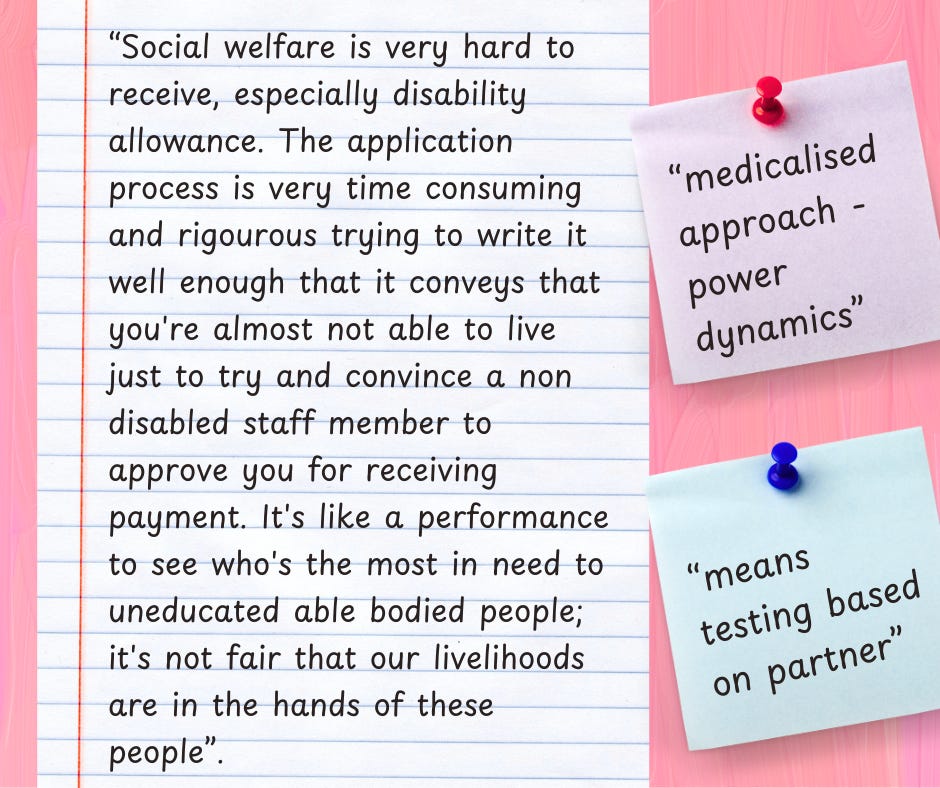
[Image 4 description: A collage-style graphic with a lined notebook page and pastel sticky notes. On lined paper: “Social welfare is very hard to receive, especially disability allowance. The application process is very time consuming and rigourous trying to write it well enough that it conveys that you’re almost not able to live just to try and convince a non disabled staff member to approve you for receiving payment. It’s like a performance to see who’s the most in need to uneducated able bodied people; it’s not fair that our livelihoods are in the hands of these people.”
Pink pinned note: “medicalised approach – power dynamics”
Blue pinned note: “means testing based on partner”]
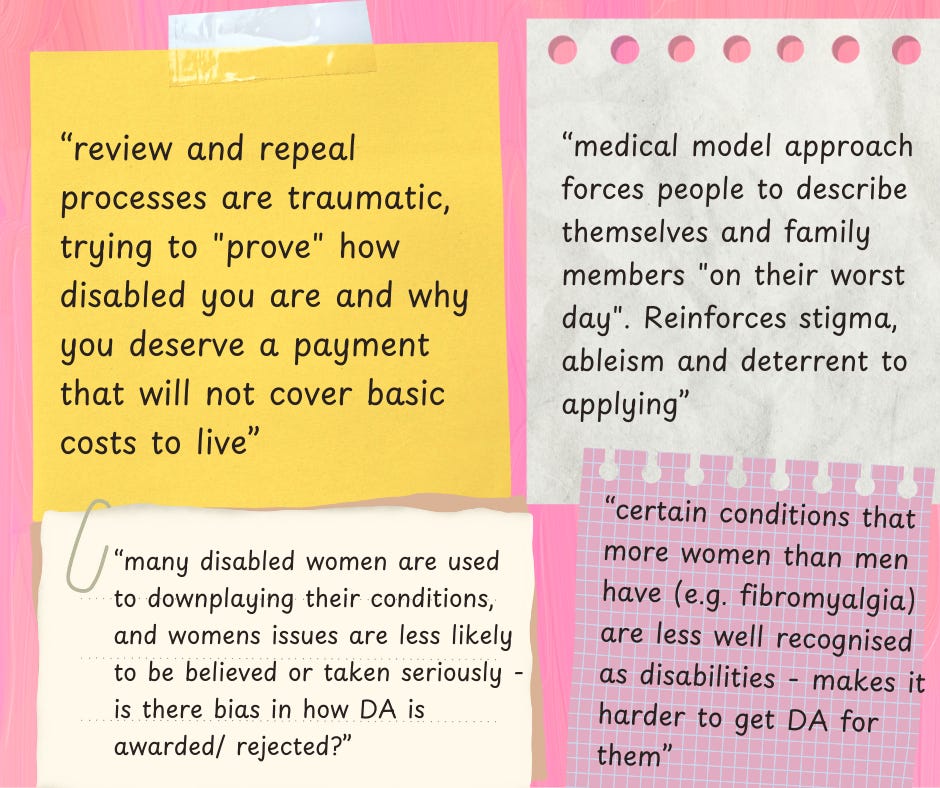
[Image 5 description: A collage-style graphic with taped and pinned notes on a pink background. Quotes read:
Yellow taped note:
“review and repeal processes are traumatic, trying to ‘prove’ how disabled you are and why you deserve a payment that will not cover basic costs to live.”
White clipped paper:
“many disabled women are used to downplaying their conditions, and womens issues are less likely to be believed or taken seriously – is there bias in how DA is awarded/rejected?”
Pink gridded note:
“certain conditions that more women than men have (e.g. fibromyalgia) are less well recognised as disabilities – makes it harder to get DA for them.”
White torn note:
“medical model approach forces people to describe themselves and family members ‘on their worst day’. Reinforces stigma, ableism and deterrent to applying.”
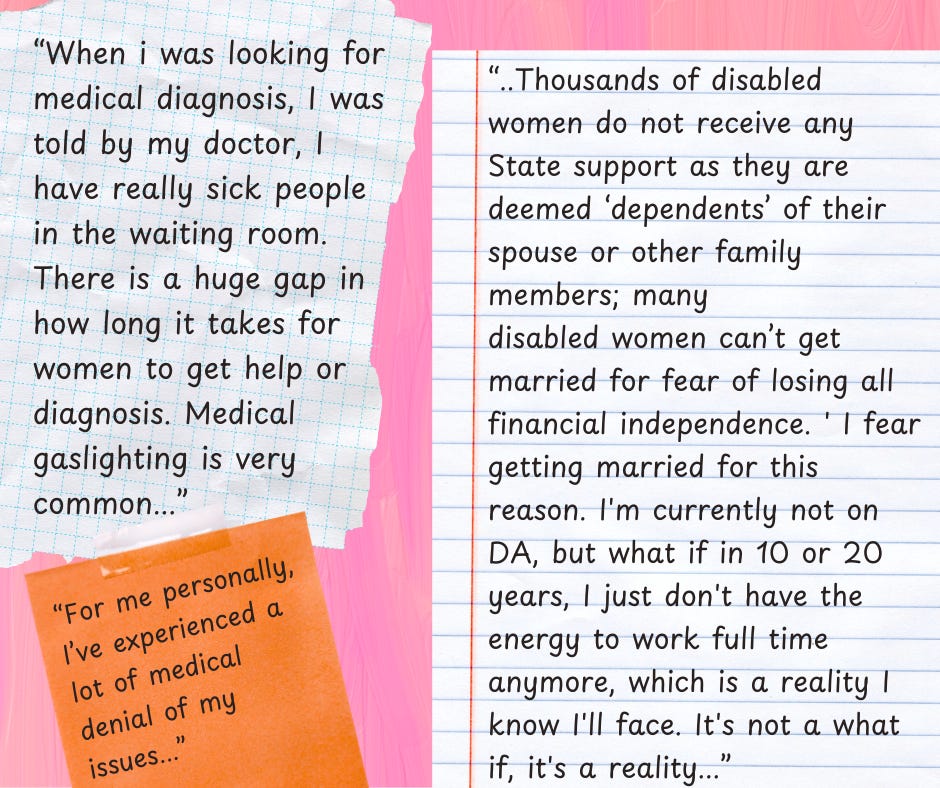
[Image 6 description: A collage-style graphic with brush-stroke background and various torn notes. Quotes read:
On lined notebook paper:
“..Thousands of disabled women do not receive any State support as they are deemed ‘dependents’ of their spouse or other family members; many disabled women can’t get married for fear of losing all financial independence. ‘I fear getting married for this reason. I’m currently not on DA, but what if in 10 or 20 years, I just don’t have the energy to work full time anymore, which is a reality I know I’ll face. It’s not a what if, it’s a reality…’”
On blue graph paper:
“When I was looking for medical diagnosis, I was told by my doctor, I have really sick people in the waiting room. There is a huge gap in how long it takes for women to get help or diagnosis. Medical gaslighting is very common…”
On an orange sticky note:
“For me personally, I’ve experienced a lot of medical denial of my issues…”]
The Disability Participation News Hub CLG is a non profit and voluntary organisation.
You can directly support our work and help us to grow by becoming a paid subscriber or donating through Buy Me A Coffee or PayPal. 🌱
Sign up to our weekly newsletter here.
info@disabilityparticipation.ie